Let’s be honest: We’ve all been there. You’re staring at a cluttered desk, laptop overheating, neck craning to see the screen, and every 10 minutes, you’re distracted by a tangled mess of cables or a phone that won’t stop dying. You bought that “productivity gadget” everyone raved about, but it’s now collecting dust in a drawer. Sound familiar? In 2026, remote, hybrid, and in-office work have blurred the lines between our professional and personal lives more than ever—and your desk setup isn’t just a “nice-to-have” anymore. It’s the foundation of your productivity, your mental health, and your ability to show up as your best self, whether you’re crunching numbers, leading a Zoom call, designing a project, or wrapping up client work.
This isn’t another “aesthetic desk setup” guide filled with overpriced decor and impractical gadgets. We’re focusing on what actually works for real professionals—people who log 8+ hours a day at their desks, juggle multiple tasks, and need a workspace that adapts to their needs, not the other way around. users (we see you, remote workers in Berlin, hybrid teams in New York, freelancers in London) face unique challenges: tight living spaces, endless video calls, burnout from “always-on” work cultures, and the pressure to stay productive without sacrificing comfort. This guide is built for you—no fluff, no one-size-fits-all solutions, just actionable steps to build a professional workspace that boosts your efficiency, protects your body, and makes you want to sit down and work.
By the end of this guide, you’ll have a clear roadmap to transform your current desk (even if it’s a tiny corner of your apartment) into a pro-level workspace that works as hard as you do. We’ll cover every essential element—from the desk and chair that support your body to the tech and accessories that eliminate distractions—and we’ll keep it real: budget-friendly options, 2026’s latest must-have tools, and common mistakes to avoid (spoiler: that “minimalist” setup you saw on Instagram might not work for your chaotic schedule). Plus, we’ll share insights from real professionals who’ve overhauled their workspaces and seen tangible results—because nothing resonates more than hearing from someone who’s been in your shoes.
Why Your Desk Setup Matters More Than You Think (2026 Edition)
Before we dive into the details, let’s talk about why this matters. In 2026, the average professional spends 9+ hours a day at their desk—more time than they spend sleeping, exercising, or with loved ones. Yet, most of us never stop to think about how our workspace impacts us. Steelcase’s 2024 research (updated in 2025) found that 78% of workers report feeling distracted or fatigued due to poor workspace design, and 62% say their desk setup contributes to back pain or eye strain. Worse, Gallup’s global workplace report shows that only 11% of employees are fully engaged at work—and a big part of that disengagement comes from environments that don’t support focus or comfort.
But it’s not just about physical comfort. Your desk setup shapes your mindset. A cluttered, disorganized space leads to a cluttered, unfocused mind—making it harder to prioritize tasks, stay motivated, and produce high-quality work. On the flip side, a intentional, well-designed workspace signals to your brain: “It’s time to work.” It reduces decision fatigue (you won’t waste 10 minutes looking for a pen or untangling a charger), boosts confidence (you’ll feel more professional on video calls), and even improves your work-life balance (a dedicated workspace helps you “switch off” when the workday ends).
For users, this is especially critical. With remote work here to stay (83% of companies in the U.S. and Europe now offer hybrid or fully remote options, per a 2026 Deloitte report), your desk is no longer just a place to work—it’s an extension of your professional brand. Whether you’re a freelancer pitching clients, a manager leading a distributed team, or an employee looking to stand out, a pro-level desk setup sends a message: You take your work seriously, and you’re invested in doing it well. And when you feel good about your workspace, you’ll produce better work—which translates to more clients, promotions, and yes, higher income (the ultimate goal for your website’s audience).
Step 1: The Foundation—Desk & Chair (The Non-Negotiables)
You can have the fanciest tech and the most organized accessories, but if your desk and chair are terrible, nothing else will save you. In 2026, ergonomics isn’t a trend—it’s a necessity. The average professional spends 6–10 hours a day sitting, and poor posture leads to chronic back pain, neck strain, and even long-term health issues. Let’s break down how to choose the right desk and chair for your needs, budget, and space.
The Desk: Ditch the “One-Size-Fits-All” and Choose Adaptability
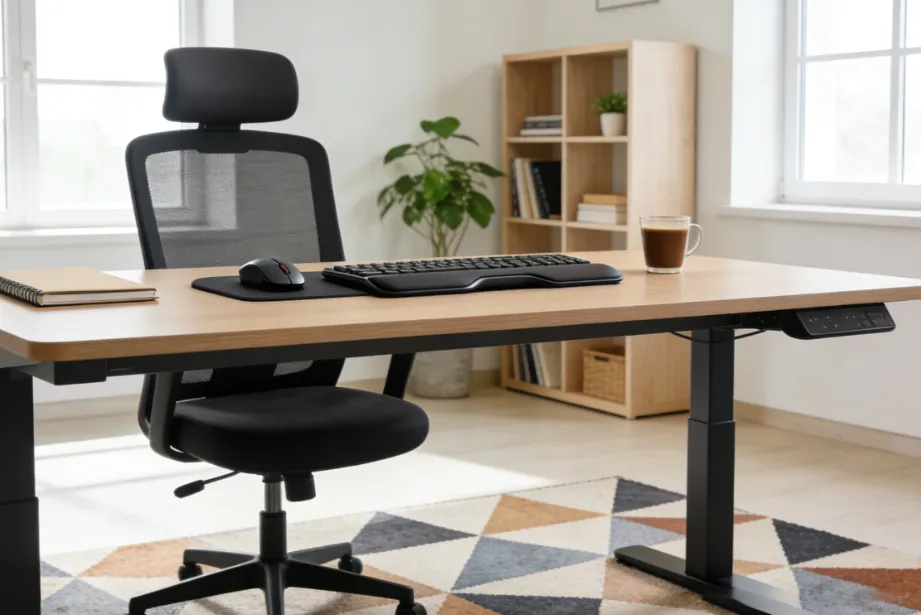
Gone are the days of bulky, fixed-height desks that force you to sit for hours on end. In 2026, standing desks are the gold standard for pro workspaces—and for good reason. Research consistently shows that switching between sitting and standing throughout the day reduces back pain, improves energy levels, and boosts focus. But not all standing desks are created equal—here’s what to look for, based on your needs:
For Small Spaces (Apartments, Studio Flats)
If you’re working in a tiny corner (we see you, New York and London renters), a compact standing desk is your best bet. Look for models that are 48” wide (minimum) to fit a laptop, monitor, and a few essentials, but won’t take over your space. Our top picks for 2026:
- Flexispot E7 (Budget-Friendly): At around $480, this electric standing desk is stable, has 4 programmable height presets, and a 5-year warranty—perfect for freelancers or remote workers on a budget. It’s slim, easy to assemble, and fits in even the smallest corners.
- Autonomous SmartDesk Mini: Sleeker than the Flexispot, with a minimalist design that looks professional on video calls. It has a quiet motor (no more loud hum during meetings) and a weight capacity of 250 lbs, so it can handle your laptop, monitor, and accessories with ease.
For Medium to Large Spaces (Home Offices, Co-Working Spots)
If you have more room (or need space for dual monitors, documents, and a printer), opt for a larger standing desk (60” wide or more). These models offer more surface area and often come with extra features like cable management trays or headphone holders:
- Uplift V2 (Mid-Range): Around $600, this desk is highly customizable—choose from different desktop materials (wood, laminate, bamboo), add a cable management system, and even a built-in power strip. It’s stable, has a smooth motor, and is a favorite among remote managers and designers.
- Fully Jarvis Bamboo (Premium): For those willing to invest ($750+), this eco-friendly desk has a beautiful bamboo top, a whisper-quiet motor, and a 15-year warranty. It’s perfect for professionals who want a premium look and feel, and it’s sustainable—something many users prioritize in 2026.
Pro Tip for 2026:
Look for desks with “anti-collision” technology—this prevents the desk from crushing your feet (or your coffee mug) when adjusting height. Also, prioritize a thick desktop (at least 1.5”) to avoid wobbling—nothing kills focus like a desk that shakes every time you type.
The Chair: Invest in Your Body (It’s Worth Every Penny)
Your chair is the most important investment you’ll make for your workspace. Why? Because you’ll spend more time in it than in your bed. A cheap, uncomfortable chair will lead to back pain, neck strain, and fatigue—and that means less productivity and more days off. In 2026, ergonomic chairs are more accessible than ever, with options for every budget. Here’s what to look for (and our top picks):
Key Features to Prioritize:
- Adjustable Lumbar Support: This is non-negotiable. The lumbar support should match the natural curve of your lower back to prevent slouching. Look for chairs with adjustable height and depth for the lumbar pad.
- Breathable Mesh Back: Avoid leather or fabric chairs that trap heat—mesh keeps you cool during long work sessions, which is a game-changer for those hot summer days in Los Angeles or Madrid.
- Adjustable Armrests: Armrests should be adjustable in height and width, so your arms are at a 90-degree angle when typing (this reduces wrist strain).
- Seat Height & Depth Adjustment: Your feet should be flat on the floor, and your thighs should be parallel to the ground. The seat depth should be long enough to support your thighs (but not so long that it presses into the back of your knees).
Top Chair Picks for 2026:
- HON Ignition 2.0 (Budget-Friendly, $300): The best ergonomic chair under $350. It has all the key features (lumbar support, mesh back, adjustable armrests) and is comfortable enough for 8+ hour workdays. Perfect for freelancers or entry-level professionals.
- Secretlab Titan Evo (Mid-Range, $500–$600): A favorite among remote workers and gamers (yes, gamers know comfort!). It has a supportive lumbar pillow, breathable mesh, and a sleek design that looks professional on video calls. It’s durable, easy to clean, and comes in a variety of colors to match your workspace.
- Herman Miller Aeron (Premium, $1,000+): The gold standard of ergonomic chairs. It’s expensive, but it’s worth it—especially if you have chronic back pain or spend 10+ hours at your desk. It’s fully customizable (seat size, armrests, lumbar support) and built to last a decade. Many professionals swear by it, and it’s a status symbol for serious workers.
Pro Tip for 2026:
If you’re on a tight budget, don’t buy a cheap “ergonomic” chair from a big-box store—they’re usually poorly made and won’t last. Instead, look for used Herman Miller or Secretlab chairs on Facebook Marketplace or eBay—many people sell them in like-new condition for half the price. Your back will thank you.
Step 2: Tech & Monitors—Eliminate Distractions, Boost Efficiency
In 2026, your tech setup is make-or-break for productivity. professionals rely on their devices to stay connected, collaborate, and get work done—and a clunky, outdated setup will slow you down. Let’s focus on the essentials: monitors, laptops/desktops, and accessories that make your workflow smoother (no more juggling 10 tabs or struggling with blurry video calls).
Monitors: More Screen Real Estate = More Productivity
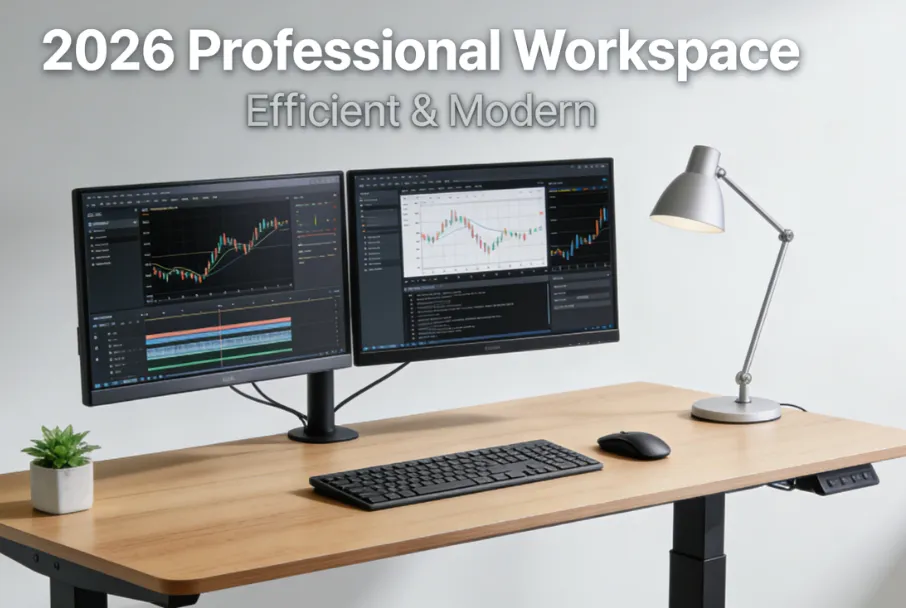
If you’re still working off a single laptop screen, you’re wasting hours of productivity. Studies show that dual monitors increase efficiency by 20–30%—you can have your email open on one screen, your project on another, and your calendar on a third (if you’re feeling ambitious). In 2026, the best monitors are sleek, high-resolution, and designed for long hours of use (no eye strain).
For Most Professionals (Remote, Hybrid, Freelancers)
A single 27” monitor (1440p or 4K) is a great starting point. If you have space, add a second 24” monitor for multitasking. Our top picks:
- Dell P2425h (24”, 1080p, $200): A budget-friendly option that’s perfect for video calls and everyday work. It has built-in speakers (so you don’t need extra speakers) and is compatible with most laptops. Great for freelancers or remote workers who need a reliable monitor without breaking the bank.
- LG 27QN600-B (27”, 1440p, $300): A step up from the Dell, with a higher resolution and better color accuracy—perfect for designers, writers, or anyone who works with visuals. It has a built-in blue light filter to reduce eye strain (critical for those late-night work sessions).
- Samsung G9 (49”, 5120×1440, $800+): For power users (designers, developers, managers), this ultra-wide monitor is a game-changer. It’s like having two 27” monitors in one, with no bezel in the middle—perfect for multitasking. It has a high refresh rate (144Hz) and vibrant colors, making it ideal for video editing or coding.
Pro Tip for 2026:
Invest in a monitor arm. Monitor arms free up desk space, let you adjust the height and angle of your monitor (to reduce neck strain), and give your workspace a sleek, professional look. Our top pick: Atdec AWM S-2-BT 75 (great for dual monitors) or VIVO Single Monitor Arm (budget-friendly, $50).
Laptops & Desktops—Choose What Works for Your Workflow
In 2026, the line between laptops and desktops is blurring—but the best choice depends on how you work. Here’s how to decide:
Laptops (Best for Remote/Hybrid Workers)
If you work from coffee shops, co-working spaces, or travel frequently, a laptop is a must. Look for models that are lightweight, have long battery life, and enough power to handle your work (no lagging when you have 20 tabs open).
- Apple MacBook Air M4 (13.6”, $1,200): A favorite among professionals for its sleek design, long battery life (18+ hours), and quiet performance. It’s perfect for writers, designers, and remote workers who need a reliable laptop that’s easy to carry. Pair it with an external monitor for a desktop-like experience at home.
- Dell XPS 13 (13.4”, $1,100): A Windows alternative to the MacBook Air. It has a beautiful 4K display, fast processor, and lightweight design (2.5 lbs). Great for professionals who prefer Windows or need to run Windows-specific software.
Desktops (Best for In-Office or Home Office Workers)
If you work from a fixed location (home office, in-office), a desktop is more powerful, cheaper, and easier to upgrade than a laptop. Look for a compact tower (so it doesn’t take up too much space) and a powerful processor.
- Apple iMac M3 (24”, $1,500): Sleek, all-in-one design (no separate tower) with a vibrant 4K display. Perfect for designers, video editors, or anyone who wants a clean, professional setup.
- HP Pavilion Desktop (i7, 16GB RAM, $800): A budget-friendly Windows desktop that’s powerful enough for most professionals. It’s compact, easy to set up, and can be upgraded with more RAM or storage as your needs grow.
Essential Tech Accessories (2026 Must-Haves)
These accessories might seem small, but they’ll make a huge difference in your workflow. They eliminate distractions, reduce strain, and make your workspace feel more professional—all things that help you get more done (and earn more money).
- Wireless Keyboard & Mouse: Ditch the wired keyboard and mouse—they’re clunky and restrict movement. Our top picks: Logitech MX Keys (keyboard) and Logitech MX Master 3 (mouse) ($200 combo). They’re wireless, ergonomic, and work seamlessly with both Mac and Windows. The MX Master 3 has a scroll wheel that’s perfect for long documents or coding, and the MX Keys has backlit keys for late-night work.
- USB-C Hub/Dock: If you have a laptop, a USB-C hub is a must. It lets you connect your monitor, keyboard, mouse, and other accessories with a single cable—no more tangled wires. Our top pick: Anker 7-in-1 USB-C Hub ($50) or Belkin Thunderbolt 3 Dock (premium, $200) for more ports.
- 3-in-1 Charging Station: Keep your phone, earbuds, and smartwatch charged and organized with a 3-in-1 charging station. Our top pick: DailyObjects Surge™ Max 3-in-1 Magnetic Wireless Charging Station ($60) — it’s fast, compatible with iPhone 12+ and all Qi-enabled devices, and keeps your desk clutter-free.
- Noise-Canceling Headphones: Critical for remote workers or anyone in a noisy environment (roommates, kids, busy streets). Our top picks: Sony WH-1000XM5 ($400, premium) or Jabra Evolve2 40 SE ($150, budget-friendly). They block out background noise, have great sound quality for video calls, and are comfortable to wear for hours.
- Laptop Stand with Cooling Fans: If you use a laptop at your desk, a stand raises it to eye level (reducing neck strain) and keeps it cool. Our top pick: Dyazo Foldable Metal Laptop Stand ($20) — it’s adjustable, has dual cooling fans, and is compatible with most laptops.
Step 3: Organization & Lighting—Clutter-Free = Focused
A cluttered desk is a cluttered mind—and in 2026, minimalism is still going strong (but not the “empty desk” kind that’s impossible to maintain). The goal is to create a workspace that’s organized, but not sterile—one that has everything you need within reach, but nothing you don’t. Plus, good lighting is non-negotiable for eye health and productivity—especially if you work late or in a room with little natural light.
Desk Organization: Keep It Simple, Keep It Functional
The key to organization is to have a place for everything—and everything in its place. You don’t need fancy organizers (unless you want them); just simple tools to keep clutter at bay. Here’s how to organize your desk like a pro:
Cable Management (The Biggest Clutter Culprit)
Tangled cables are not only ugly—they’re a distraction. In 2026, cable management is easier than ever, with affordable tools to keep your wires neat:
- Cable Trays: Attach a cable tray under your desk to hide power strips and excess cables. Our top pick: VIVO Under Desk Cable Management Tray ($20).
- Cable Clips: Use cable clips to keep wires (keyboard, mouse, monitor) organized on your desk. Our top pick: J-Channel Cable Clips ($10, 10-pack).
- Cable Sleeves: Wrap multiple cables together (like your laptop charger and USB-C cable) with a cable sleeve to keep them from tangling. Our top pick: Cable Matters Cable Sleeve ($15).
Desk Organizers (For the Essentials)
Keep your pens, notebooks, and small accessories organized with simple desk organizers. Avoid overcomplicating it—here’s what you need:
- Pen Cup: A simple metal or ceramic pen cup to hold pens, pencils, and markers. Our top pick: Muji Aluminum Pen Cup ($10) — minimalist and sleek.
- Desk Drawer Organizer: If your desk has drawers, use an organizer to separate paperclips, sticky notes, and other small items. Our top pick: Amazon Basics Desk Drawer Organizer ($15).
- Desk Mat: A large desk mat protects your desk, keeps your mouse gliding smoothly, and adds a touch of style. Our top pick: Chemistors Premium PU Leather Desk Mat ($40) — it’s reversible, compatible with wireless charging, and covers most of your desk space.
Pro Tip for 2026:
Do a “desk reset” every evening. Before you log off, put away all your items, close your tabs, and wipe down your desk. This way, you’ll start the next day with a clean, organized workspace—and no morning stress.
Lighting: Bright, Warm, and Easy on the Eyes
Poor lighting leads to eye strain, headaches, and fatigue—all of which kill productivity. In 2026, the best desk lighting is adjustable, warm (not harsh), and complements natural light. Here’s how to set up your lighting like a pro:
Natural Light First
Whenever possible, position your desk near a window. Natural light boosts mood, improves focus, and reduces eye strain. If you can’t position your desk near a window (e.g., small apartment), use artificial light that mimics natural light.
Desk Lamps (Essential for Evening Work)
Choose a desk lamp with adjustable brightness and color temperature (warm to cool). Warm light (2700K–3000K) is best for evening work (it doesn’t disrupt your sleep), while cool light (4000K–5000K) is better for daytime work (it boosts alertness).
- BenQ e-Reading LED Desk Lamp ($100): The gold standard for desk lamps. It has adjustable brightness, color temperature, and a built-in sensor that adjusts the light based on your environment. It’s easy on the eyes and perfect for long work sessions.
- Amazon Basics LED Desk Lamp ($30): A budget-friendly option that has all the essentials—adjustable brightness, color temperature, and a flexible neck. Great for freelancers or remote workers on a budget.
Ring Light (For Video Calls)
In 2026, video calls are a daily part of work—and poor lighting makes you look unprofessional (or washed out). A ring light is a small investment that makes a big difference. Our top pick: Neewer 10” Ring Light ($40) — it’s adjustable, has a phone holder, and is perfect for Zoom calls, client meetings, or social media content.
Step 4: Personalization—Make It Yours (Without the Clutter)
Your workspace shouldn’t feel like a cold, sterile office—it should feel like yours. Personalization boosts mood and motivation, but it’s important to keep it minimal (no clutter!). Here’s how to personalize your desk in 2026, without sacrificing productivity:
- Plants: A small plant adds life to your desk and improves air quality. Choose low-maintenance plants like a snake plant, pothos, or succulent—they don’t require much water and thrive in indoor light. Our top pick: Small Snake Plant ($15) — it’s nearly impossible to kill.
- Art/Photos: Hang a small piece of art or a photo of your family, friends, or favorite place on the wall behind your desk. It’s a subtle reminder of what matters and boosts your mood during long workdays.
- Scents: A small candle or essential oil diffuser adds a pleasant scent to your workspace (no strong fragrances!). Lavender or peppermint is great for focus and relaxation. Our top pick: Bath & Body Works Eucalyptus Mint Candle ($20).
- Desk Accessories with Personality: Choose a pen cup, desk mat, or mouse pad that reflects your style—whether it’s minimalist, bold, or vintage. It’s a small touch that makes your workspace feel unique.
Pro Tip for 2026:
Less is more. Don’t overcrowd your desk with decor—stick to 1–2 personal items. Too many decorations are distracting and defeat the purpose of an organized workspace.
Step 5: 2026 Trends to Embrace (and Ones to Skip)
Every year, there are new trends in desk setups—but not all of them are practical. Here are the 2026 trends worth embracing, and the ones to skip (save your money!):
Trends to Embrace
- Smart Workspaces: Devices that connect to your phone or laptop (e.g., smart desk lamps, smart charging stations) are becoming more popular. They let you control your workspace with a tap—perfect for busy professionals. Our top pick: Autonomous SmartDesk 4 (it connects to your phone, so you can adjust the height from your couch).
- Sustainable Materials: users are prioritizing eco-friendly products in 2026—look for desks made from bamboo, recycled wood, or sustainable plastic. The Fully Jarvis Bamboo desk is a great example.
- Privacy Solutions: With open offices and shared living spaces, privacy is a top concern. Invest in a noise-canceling headset (we mentioned this earlier) or a desk divider (if you’re in an office) to create a focused space. Steelcase’s research shows that privacy boosts productivity and engagement—so this is a trend worth investing in.
Trends to Skip
- Over-the-Top Aesthetic Gadgets: Those “viral” desk gadgets (e.g., RGB lights, fancy pencil holders) might look cool on Instagram, but they’re often impractical and distracting. Stick to gadgets that serve a purpose (e.g., a wireless charger, a monitor arm).
- Extremely Minimalist Setups: The “empty desk” trend is great for photos, but it’s not practical for real work. You need to have your essentials within reach—don’t sacrifice functionality for aesthetics.
- Expensive Decor: You don’t need to spend $100 on a plant or $200 on a art print. Keep personalization affordable—thrift stores, Etsy, and Amazon have great options at a fraction of the price.
Real Stories: How Professionals Transformed Their Workspaces (and Their Careers)
Nothing resonates more than real stories from real people. Here are three professionals who overhauled their desk setups in 2025 and saw tangible results—proof that a pro workspace really does work.
Sarah, Freelance Graphic Designer (London)
“Before I upgraded my desk setup, I was working from a tiny kitchen table with a laptop and a cheap chair. I had back pain every day, and I was struggling to meet deadlines because I was so distracted by clutter and eye strain. In 2025, I invested in a Flexispot standing desk, a Secretlab chair, and a dual-monitor setup. Now, I can work for 8+ hours without pain, and my productivity has increased by 30%. I’ve taken on more clients because I’m able to work faster and produce better work—and my income has gone up by $1,500 a month. It was a small investment, but it’s paid off tenfold.”
Mark, Remote Marketing Manager (New York)
“I work from a studio apartment in Brooklyn, so space is tight. My old setup was a foldable desk that I stored in the closet every night—and it was killing my motivation. I upgraded to a compact Autonomous SmartDesk Mini and a Herman Miller Aeron chair (used, from Facebook Marketplace). I also added a ring light and noise-canceling headphones to make video calls better. Now, I have a dedicated workspace that I don’t have to put away—and it’s changed my mindset. I’m more focused, I take fewer breaks, and my team has noticed a difference in my work. Plus, I no longer dread logging on in the morning.”
Emma, In-Office Software Developer (Berlin)
“My office had generic desks and chairs, and I was dealing with chronic neck pain. I talked to my boss about upgrading my setup, and they agreed to let me bring in my own monitor arm, keyboard, and mouse. I also added a desk mat and a small plant to make the space feel like mine. Now, my neck pain is gone, and I’m able to code for longer without fatigue. I’ve even been able to take on more projects because I’m more productive—and I got a promotion last month. A good workspace isn’t just about comfort—it’s about enabling you to do your best work.”
Final Thoughts: Build a Workspace That Grows With You
Your desk setup isn’t a one-time project—it’s something that should grow with you as your career evolves. In 2026, the best pro-work desk setups are adaptable, functional, and personalized. They’re not about having the fanciest gadgets or the most aesthetic decor—they’re about creating a space that supports your productivity, protects your body, and makes you feel proud to work there.
Remember: Every investment you make in your workspace is an investment in yourself and your career. A $300 ergonomic chair might seem expensive now, but it’s worth it when you’re not dealing with back pain or missing deadlines. A dual-monitor setup might feel like a luxury, but it will save you hours of time every week.
Now, it’s time to take action. Grab a notebook, assess your current desk setup, and make a list of the changes you need to make. Start small (e.g., add a cable organizer, adjust your chair height) and build from there. Your future self—productive, pain-free, and successful—will thank you.
Here’s to a 2026 filled with focused work, comfortable days, and a workspace that actually works for you.