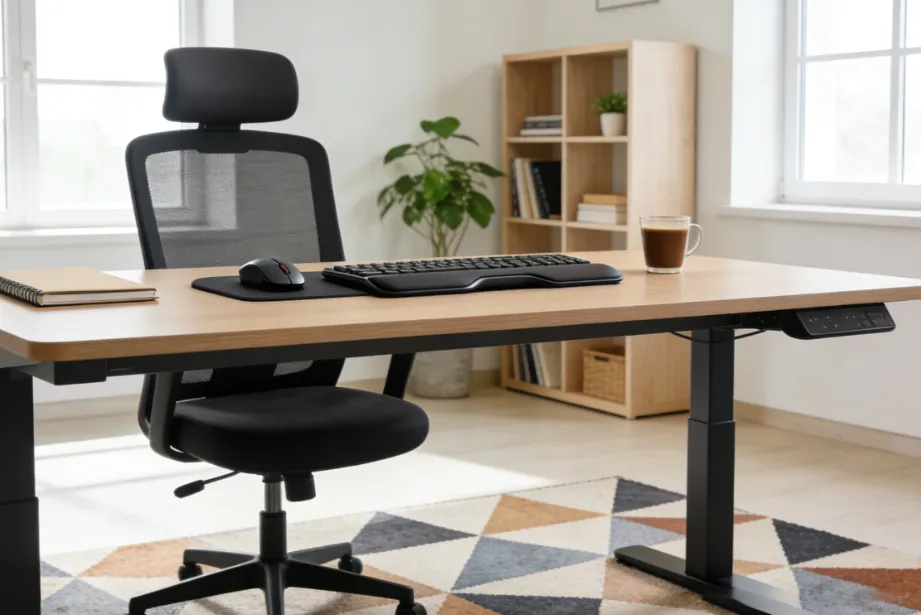
Picture this: You sit down at your desk to tackle your to-do list, ready to be productive and focused. But as you glance at your workspace, your eyes land on a stack of unopened mail, a half-empty coffee mug, a tangled mess of charging cables, and a dozen sticky notes scattered across the surface. Suddenly, your mind feels just as cluttered as your desk—you can’t focus on one task, you’re overwhelmed by the chaos, and by mid-afternoon, you’re exhausted, having accomplished far less than you planned. Sound familiar? For millions of professionals—whether working from a home office, a co-working space, or a corporate cubicle—this scenario is a daily reality. We live in a world that glorifies “more”: more tasks, more notifications, more stuff, more distractions. But what if the key to better productivity, clearer mental focus, and less stress isn’t “more”—but “less”? That’s the power of a minimalist office, and its impact on our productivity and mental clarity is rooted in science, psychology, and the way our brains are wired to function.
Minimalism isn’t about stripping your workspace of all personality or living in a sterile, empty room. It’s about intentionality: keeping only what serves you, removing what distracts you, and creating a space that supports your goals rather than hindering them. For audiences—who often grapple with the pressure of long work hours, digital overload, and the constant quest to “do it all”—a minimalist office isn’t just a design trend; it’s a lifeline. It’s a way to reclaim control over your environment, your time, and your mental state. In this article, we’ll dive deep into the psychology behind minimalist workspaces, explore exactly how they boost productivity and mental clarity, and share practical steps to create your own—all through the lens of the challenges and aspirations that resonate most with workers.
The Psychology Behind Minimalist Workspaces: Why “Less” Actually Feels Like “More”
To understand why a minimalist office works, we first need to understand how our brains respond to clutter and chaos. For professionals, who are often bombarded with sensory input—emails, Slack messages, phone calls, and physical clutter—our prefrontal cortex (the part of the brain responsible for focus, decision-making, and self-control) is constantly working overtime. Neuroscientists have proven that clutter isn’t just a visual annoyance; it’s a cognitive burden that drains our mental energy and impairs our ability to think clearly.
Dr. Sabine Kastner, a neuroscientist at Princeton University, conducted a landmark study that found distractions in our visual environment directly impede our brains’ ability to function effectively. When we’re surrounded by clutter—whether it’s a messy desk, piles of paperwork, or unnecessary decor—our brains are forced to filter out irrelevant information, which creates a state of “cognitive load.” This load leaves us with less mental bandwidth to focus on the tasks that matter, leading to fatigue, procrastination, and poor decision-making. It’s why you might feel drained after a day spent working in a cluttered space, even if you didn’t do much physical work: your brain was working overtime just to navigate the chaos.
But the psychology of minimalism goes beyond just reducing cognitive load. It also taps into our innate desire for order and control—a desire that’s particularly strong for workers, who often feel overwhelmed by the unpredictability of modern work life (think: last-minute deadlines, constant schedule changes, and the blurring of work and home boundaries). A minimalist office creates a sense of calm and predictability. When your space is organized and uncluttered, your brain interprets it as a safe, manageable environment, which reduces stress and anxiety. Research from UCLA’s Center on Everyday Lives and Families found that saturated, cluttered spaces are more likely to induce stress, while clean, simple spaces promote a sense of calm and well-being.
Another psychological principle at play is the “contextual learning” effect, as explained in a 2026 article from Psychology Today. Our brains learn to associate environments with specific behaviors and emotions. If your desk is cluttered and chaotic, your brain will start to associate that space with stress, overwhelm, and distraction. But if your desk is minimalist and organized, your brain will associate it with focus, productivity, and calm. It’s similar to how we learn to associate our bedroom with sleep—when we consistently use a space for one purpose, our brains adapt, making it easier to engage in that behavior. For professionals who work from home, this is especially important: creating a minimalist home office helps your brain distinguish between “work mode” and “relax mode,” reducing the blur between work and personal life that so many struggle with.
Minimalism also aligns with the concept of “decision fatigue”—a phenomenon that plagues busy professionals. Every time we make a small decision (like where to put a pen, which stack of papers to tackle first, or how to organize our desk), we use up mental energy. Over time, this fatigue leads to poor decision-making and a lack of motivation. A minimalist office eliminates these small, unnecessary decisions by creating a streamlined, consistent space. When everything has a place and there’s no clutter to sort through, you can redirect that mental energy to the tasks that actually move the needle—whether that’s finishing a project, closing a deal, or brainstorming new ideas.
How a Minimalist Office Boosts Productivity: Real Results for Professionals
Now that we understand the psychology behind it, let’s break down exactly how a minimalist office translates to better productivity—results that resonate with the daily challenges of workers, from remote freelancers to corporate executives.
1. Eliminates Distractions and Fosters Deep Work
Deep work—focused, uninterrupted work on a cognitively demanding task—is the key to high productivity, yet it’s something many professionals struggle to achieve. We’re constantly distracted by notifications, cluttered surfaces, and the urge to “multitask” (which, research shows, actually reduces productivity by up to 40%). A minimalist office removes these distractions by design. When your desk has only the essentials (a laptop, a notebook, a pen, and maybe a small plant), there’s nothing to pull your attention away from your work. No more staring at a stack of unopened mail, no more untangling cables, no more searching for a missing document in a pile of clutter.
Consider the example of a minimalist home office featured on Architectural Foundation: a sleek setup with a dark wood desk, a comfortable woven chair, and just a few thoughtful touches—like a black vase with delicate branches and a modern desk lamp—creates a distraction-free zone where focus comes naturally. The stark simplicity of the space allows ideas to flow freely without the mental noise of clutter. For professionals who need to block out the chaos of daily life (whether it’s kids at home, a busy co-working space, or a noisy office), this kind of distraction-free environment is a game-changer. It allows you to enter a state of flow—where time flies by, and you’re fully immersed in your work—leading to higher-quality output and faster results.
2. Reduces Stress and Increases Motivation
Stress is the enemy of productivity. When we’re stressed, our bodies go into “fight or flight” mode, which impairs our ability to focus and think critically. For workers, who often face high-pressure deadlines, tight schedules, and the pressure to “be on” 24/7, stress is a constant companion. But a minimalist office can help counteract this. As research from the University of Connecticut shows, the act of decluttering and creating an organized space can generate a sense of accomplishment, which boosts mood and reduces stress.
A clean, uncluttered workspace also creates a sense of control. When you’re in charge of your environment, you feel more in control of your workday—which reduces feelings of overwhelm and increases motivation. Think about it: if you sit down at a cluttered desk, you’re immediately faced with a “to-do” list of just organizing your space, which can make you feel defeated before you even start working. But if you sit down at a minimalist desk, you’re greeted with a blank slate—a space that invites you to start working, not to clean up. This small shift in environment can have a huge impact on your mindset and your willingness to tackle tough tasks.
Take the Six N. Five headquarters in Barcelona, designed by architect Isern Serra. This minimalist space combines functionality with calm, using light as a key medium to create an open, airy atmosphere. The soft colors and uncluttered design neutralize the stress of a busy workday, creating a space where employees feel motivated and focused. For professionals, who often associate their workspaces with stress and pressure, this kind of environment is a breath of fresh air—one that makes work feel more manageable and less overwhelming.
3. Improves Time Management and Efficiency
Time is a precious commodity for professionals, and a cluttered office is a huge waste of time. How many minutes (or hours) do you spend each day searching for a missing pen, a important document, or a charging cable? How much time do you waste sorting through piles of paperwork or moving clutter out of the way to work? A minimalist office eliminates these time-wasters by keeping everything organized and in its place.
Minimalism also encourages intentionality in how you use your space—and your time. When you’re not surrounded by unnecessary items, you’re more likely to focus on the tasks that matter. You’re less likely to get sidetracked by trivial things, and more likely to prioritize your most important work. For example, a minimalist desk setup might include a second monitor (a favorite of minimalists for its efficiency) that allows you to work on one screen while keeping reference materials on the other—eliminating the need to click between tabs and lose momentum. This kind of efficiency doesn’t just save time; it also reduces frustration and keeps you focused on your goals.
Storage solutions are also a key part of a minimalist office’s efficiency. As seen in the elegant minimalist home offices featured on Architectural Foundation, storage is seamlessly integrated into the design—keeping essentials within reach but out of sight. This means no more cluttered surfaces, no more searching for items, and more time spent on productive work. For professionals who juggle multiple tasks and deadlines, this kind of efficiency can be the difference between meeting a deadline and falling behind.
4. Boosts Creativity and Innovation
Many people assume that minimalism is “boring” or “restrictive,” but the opposite is true—especially for creative professionals. A cluttered space overwhelms the brain, leaving no room for new ideas. But a minimalist space creates mental space for creativity and innovation. When your environment is calm and uncluttered, your brain is free to think outside the box, make connections, and come up with new solutions.
Research has shown that clean, organized spaces foster creativity by reducing cognitive load and allowing the brain to focus on creative thinking. For example, a study from the University of Connecticut found that people who work in cluttered spaces are less likely to come up with creative solutions to problems, while those who work in minimalist spaces are more likely to think creatively. This is especially important for professionals in creative fields—designers, writers, marketers, and entrepreneurs—who rely on their creativity to succeed.
The Balzar Arquitectos office in Valencia, Spain, is a perfect example of how minimalism can boost creativity. This 200-square-meter space uses natural light, simple materials, and open design to create an environment that fosters collaboration and creativity. The uncluttered workspace allows architects to focus on their designs without distractions, while the open layout encourages teamwork and the sharing of ideas. For creative professionals, a minimalist office isn’t just a place to work—it’s a place to inspire and be inspired.
How a Minimalist Office Enhances Mental Clarity: From Chaos to Calm
Productivity is important, but mental clarity is equally vital—especially in a world that’s constantly pulling our attention in a hundred different directions. A minimalist office doesn’t just make you more productive; it makes you clearer-headed, more present, and better able to handle the challenges of work and life. Here’s how:
1. Reduces Mental Clutter and Overwhelm
Our brains can only process a limited amount of information at once. When we’re surrounded by physical clutter, our minds become cluttered too. We feel overwhelmed, scattered, and unable to focus. A minimalist office removes this mental clutter by simplifying your environment. When your space is clean and organized, your mind feels clean and organized too. You’re able to think more clearly, make better decisions, and stay present in the moment.
For professionals who often feel “burnt out” from the constant demands of work, this mental clarity is a lifesaver. It allows you to step back, prioritize, and focus on what’s truly important—instead of being swept up in the chaos. As Dr. Kastner’s research shows, reducing visual clutter directly improves our brain’s ability to function, leading to clearer thinking and better focus. It’s why so many people report feeling “lighter” and more focused after decluttering their workspace—they’re not just cleaning their desk; they’re clearing their mind.
2. Promotes Mindfulness and Presence
Mindfulness—being fully present in the moment—is a practice that’s gaining popularity among professionals, as it helps reduce stress and improve mental well-being. A minimalist office encourages mindfulness by removing distractions that pull you out of the present moment. When you’re not constantly checking your phone, sorting through clutter, or thinking about all the things you need to clean up, you’re able to focus on the task at hand. You’re more aware of your thoughts, your feelings, and your environment, which leads to greater mental clarity and emotional balance.
A minimalist office also creates a sense of calm that supports mindfulness. For example, a bright white workspace with natural light, a few plants, and simple furniture—like the ones featured on Architectural Foundation—creates a tranquil setting that encourages presence and focus. The plants add a touch of nature, which has been shown to reduce stress and improve mood, while the clean lines and neutral colors create a sense of peace. For professionals who struggle to “unplug” and be present, this kind of environment is a powerful tool.
3. Improves Emotional Well-Being and Reduces Anxiety
Anxiety is a common issue among professionals, and clutter can exacerbate it. Studies have shown that cluttered spaces increase levels of the stress hormone cortisol, which can lead to anxiety, fatigue, and even physical health problems. A minimalist office, on the other hand, reduces cortisol levels and promotes a sense of calm. When your space is organized and uncluttered, you feel more in control, which reduces anxiety and improves emotional well-being.
The psychology behind this is simple: clutter creates a sense of chaos and unpredictability, which triggers our brain’s “fight or flight” response. A minimalist office creates a sense of order and predictability, which calms our nervous system. For example, the Fuego Camina Conmigo headquarters in Barcelona, designed by Isern Serra, uses white blocks, natural light, and soft fabrics to create a space that’s both structured and calming. The design balances rational order with emotional warmth, creating an environment that reduces anxiety and promotes well-being. For professionals who struggle with work-related anxiety, a minimalist office can be a sanctuary—a place where they feel calm, focused, and in control.
How to Create a Minimalist Office That Resonates with欧美 Professionals (Practical Steps)
Now that you understand the benefits of a minimalist office, it’s time to create your own. The key is to keep it simple, intentional, and tailored to your needs—no need to spend a lot of money or completely overhaul your space. Here are practical steps that work for professionals, whether you’re working from home, a co-working space, or a corporate office:
1. Start with a “Declutter Audit”
The first step to creating a minimalist office is to declutter. But instead of just throwing things away, take a intentional approach. Go through every item on your desk, in your drawers, and on your shelves, and ask yourself three questions: Do I use this regularly? Does this serve a purpose? Does this bring me joy or add value to my work? If the answer to all three is “no,” it’s time to let it go.
For professionals, this can be challenging—we often hold onto items “just in case” or because they have sentimental value. But remember: minimalism isn’t about being perfect; it’s about being intentional. Start small: tackle your desk surface first, then move to your drawers, then your shelves. Create four piles: keep, store, donate, and throw away. For paperwork, convert as much as possible to digital copies to reduce clutter—this is especially helpful for remote workers who deal with a lot of documents. By the end of this audit, your space will feel lighter, and you’ll have a clear idea of what’s essential.
2. Keep Only the Essentials (and Make Them Count)
A minimalist office isn’t about having nothing—it’s about having only what you need. For mostprofessionals, the essentials include: a laptop or desktop computer, a comfortable chair, a desk, a notebook, a pen, and a source of light. Everything else is optional. If you use a second monitor for work, keep it—but if you don’t, don’t feel pressured to add one. If you need a desk organizer to keep your pen and notebook tidy, use it—but avoid decorative organizers that add clutter.
When choosing furniture and accessories, opt for high-quality, functional items that align with your style. For example, a dark wood desk (like the one featured in Architectural Foundation’s minimalist designs) adds warmth and sophistication without being cluttered. An ergonomic chair is a worthwhile investment— it supports your body, reduces discomfort, and helps you stay focused during long work sessions. Remember: quality over quantity. One well-made item is better than ten cheap, unnecessary ones.
3. Optimize for Natural Light and Calm Colors
Natural light is a key element of a minimalist office—it boosts mood, improves focus, and creates a sense of openness. If possible, position your desk near a window to take advantage of natural light. If you don’t have access to natural light, use soft, warm artificial light (avoid harsh overhead lights, which can be draining). A adjustable desk lamp is a great option, as it allows you to control the lighting and create a calm atmosphere.
When it comes to colors, stick to neutral, calm tones—white, beige, gray, or soft blue. These colors promote calm and focus, while bright, bold colors can be distracting. You can add a pop of color with a small plant or a piece of art, but keep it minimal. For example, the Balzar Arquitectos office uses neutral tones and natural materials to create a calm, sophisticated atmosphere. The key is to keep the color palette simple and cohesive—this creates a sense of harmony and calm in your space.
4. Create a System for Organization
Minimalism isn’t a one-time task—it’s a lifestyle. To keep your office clutter-free, you need a system for organization. For example, use drawer dividers to keep your pens, paperclips, and other small items organized. Use a filing cabinet or digital storage system for paperwork. Create a “inbox” for items that need your attention, and process them daily. Set aside 10 minutes at the end of each workday to tidy up your desk—this ensures that you start each day with a clean, clutter-free space.
For professionals who are busy, this system doesn’t have to be complicated. The goal is to make organization easy and sustainable. For example, if you’re a remote worker, use a digital to-do list to keep track of your tasks, and scan important documents to avoid paper clutter. If you’re in a corporate office, use a simple desk organizer to keep your essentials within reach, and clear your desk at the end of each day. The more consistent you are, the easier it will be to maintain your minimalist office.
5. Add Personal Touches (Sparingly)
A common misconception about minimalism is that it’s cold and impersonal. But a minimalist office can still feel like “yours”—you just need to add personal touches sparingly. For欧美 professionals, this might mean a small plant (which adds life and reduces stress), a framed photo of your family or friends, or a piece of art that inspires you. The key is to choose items that bring you joy and don’t add clutter.
For example, the bright white workspace featured on Architectural Foundation includes a few personal touches—like a framed picture and scattered plants—that add character without overwhelming the space. These small touches make the space feel warm and inviting, while still maintaining the minimalist aesthetic. Remember: personal touches should enhance your space, not distract from it.
The Bottom Line: Minimalism Isn’t About Perfection—It’s About Progress
For professionals, a minimalist office isn’t just a design choice—it’s a tool to boost productivity, enhance mental clarity, and reduce stress. It’s about creating a space that works for you, not against you. It’s about letting go of the “more” that’s weighing you down and embracing the “less” that brings you calm and focus.
Remember: minimalism isn’t about being perfect. It’s about being intentional. You don’t have to declutter your entire office in one day, and you don’t have to get rid of everything you own. Start small—declutter one drawer, clear your desk surface, or add a source of natural light. Over time, these small changes will add up, and you’ll notice a difference in your productivity, your mental clarity, and your overall well-being.
In a world that’s constantly telling us we need more—more stuff, more tasks, more distractions—a minimalist office is a rebellion. It’s a way to take back control of your space, your time, and your mind. And for professionals who are tired of feeling overwhelmed, stressed, and unproductive, it’s a game-changer. So why not give it a try? Your brain, your productivity, and your mental health will thank you.
Ready to transform your workspace? Start with one small step today, and watch as your minimalist office becomes a source of calm, focus, and productivity.