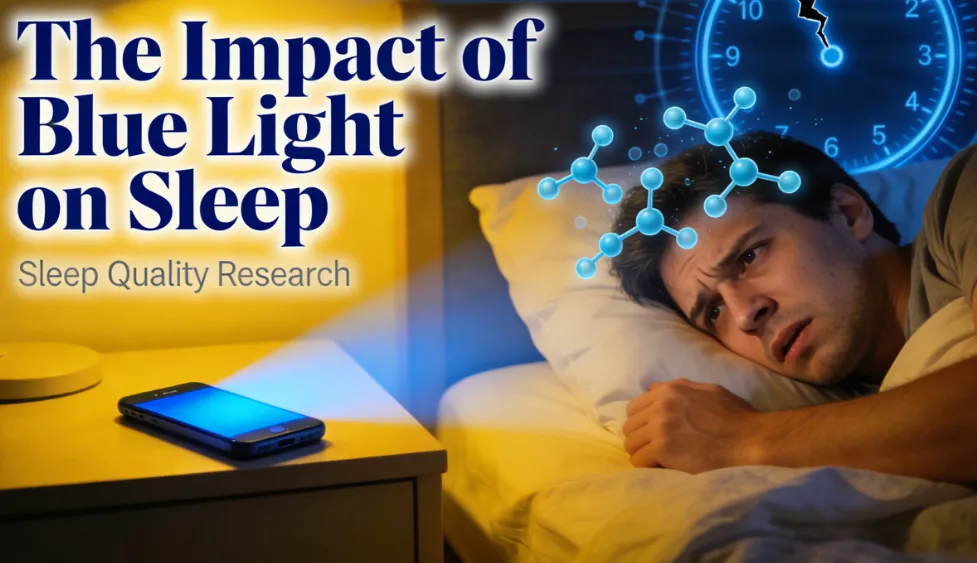
In a world where we scroll, stream, and work until our eyes feel heavy, one silent culprit is stealing your rest: blue light. You’ve felt it—you lie in bed, phone in hand, convinced “just one more episode” or “one last email” won’t hurt, only to lie awake for hours, mind racing, sleep eluding you. For 60% of U.S. adults, this nightly ritual is normal. But it shouldn’t be. Blue light isn’t just a minor annoyance; it’s a circadian disruptor that erodes deep sleep, fuels daytime fatigue, and even harms long-term health.
The good news? You don’t need to quit screens cold turkey. With science-backed strategies to mitigate blue light’s effects and build a restorative night routine, you can reclaim your sleep—starting tonight. This guide breaks down exactly how blue light attacks your sleep, the myths vs. facts about filters and glasses, and a step-by-step plan to create a digital detox night routine that works for your lifestyle.
The Science: How Blue Light Hijacks Your Sleep Cycle
To beat blue light, you first need to understand its superpower: it speaks directly to your brain’s “master clock.”
Your Body’s Natural Sleep Rhythm (And How Blue Light Disrupts It)
Your sleep-wake cycle is governed by two key systems:
- Homeostatic sleep pressure: Builds as your day progresses—by 10 PM, your body is primed for rest.
- Circadian rhythm: Driven by light. When the sun sets, your brain’s suprachiasmatic nucleus (SCN) signals the pineal gland to release melatonin—the “sleep hormone”—preparing your body for bed.
Blue light (wavelengths of 440–495 nm) is the most disruptive to this rhythm. It’s bright, it’s ubiquitous, and it tricks your brain into thinking it’s still daytime. Here’s what happens:
- Melatonin suppression: Even low-intensity blue light from a phone or laptop can cut melatonin release by 50–70% in the hour before bed, delaying your sleep onset by 1–2 hours.
- Circadian misalignment: Blue light shifts your internal clock, making it harder to fall asleep and stay asleep. You’ll spend more time in light, restless sleep and less in deep sleep—the stage where your body repairs cells, consolidates memories, and recharges.
- Brain arousal: Blue light stimulates the prefrontal cortex, keeping your mind alert long after you’ve set down your device. That “tired but wired” feeling? It’s blue light at work.
The Hidden Cost of Screen Time vs. Deep Sleep
It’s not just about falling asleep—it’s about staying asleep. Research paints a stark picture:
- A 2025 study of 120,000 adults found that using a screen within 30 minutes of bedtime reduced deep sleep by 10% and increased nighttime awakenings by 22%.
- College students who used phones before bed reported 3x more sleep disturbances and 40% lower next-day productivity than those who didn’t.
- Even kids aren’t safe: A 2026 study found that children with high screen time before bed had 75% lower sleep efficiency (time spent sleeping vs. time in bed) and were 2x more likely to be sleepy during the day.
The cycle is brutal: Poor sleep from blue light leads to daytime fatigue, which makes you reach for your phone to stay awake—worsening blue light exposure at night. Break it, and you’ll feel the difference in days, not weeks.
Debunking the Myths: What Really Works to Block Blue Light
You’ve probably seen the ads: “Blue light glasses cure insomnia!” or “This app fixes your sleep!” Not so fast. Let’s separate fact from fiction to avoid wasting time (and money) on ineffective solutions.
Myth 1: Blue Light Glasses Are a Silver Bullet
Fact: Results are mixed, and they’re not for everyone.
- A 2025 Cochrane review of 17 randomized controlled trials (619 participants) found that blue light glasses offered no significant improvement in sleep quality or eye strain for the general adult population.
- However, they can help a subset of users: those who wear high-strength amber/red-tinted lenses (blocking 60%+ of blue light) for 2–3 hours before bed, especially those with sleep onset difficulties. For example, a 2024 PLOS study found that children wearing partial blue light blocking glasses fell asleep 10 minutes earlier and had less daytime irritability.
- Bottom line: If you must use a screen at night, try amber-tinted glasses—but don’t rely on them as a replacement for reducing screen time.
Myth 2: Screen Filters (Night Shift, f.lux) Solve the Problem
Fact: They help, but they’re not enough.
- Built-in filters like Apple’s Night Shift and Android’s Blue Light Filter reduce blue light by shifting your screen’s color temperature to warmer hues (2700K–3000K) in the evening. This eases eye strain and slightly mitigates melatonin suppression—but they don’t eliminate the problem entirely.
- A 2025 observational study found that only 10% of smartphone users regularly use blue light filters, and there was no significant link between filter use and improved sleep efficiency for most age groups.
- Pro tip: Use filters as a complement to, not a substitute for, reducing screen time. Pair Night Shift with a screen curfew for best results.
Myth 3: Dim Screens Are Harmless
Fact: Dim screens still emit blue light—just less of it.
- Even at 20% brightness, a phone screen emits enough blue light to disrupt melatonin production. The key isn’t just brightness; it’s blue light wavelength. Warm, dim light (2200K–2700K) is far less disruptive than bright, cool light (5000K+).
- Bottom line: Dim your screen, but pair it with a screen curfew to give your body time to wind down.
Your 5-Step Digital Detox Night Routine (Backed by Science)
The most effective solution isn’t about “blocking” blue light—it’s about working with your circadian rhythm to signal rest. This 5-step routine is designed to reduce blue light exposure, boost melatonin, and prep your body for deep sleep. It’s flexible—adapt it to your lifestyle, and stick with it for 7 days to see results.
Step 1: Set a “Digital Curfew” (30–60 Minutes Before Bed)
Start by picking a firm time to stop using screens—aim for 30–60 minutes before bed (e.g., 9:30 PM if you sleep at 10:00 PM). This window gives your brain time to lower melatonin suppression and shift into rest mode.
- How to stick to it:
- Use your phone’s built-in timer (iOS: Screen Time > Downtime; Android: Digital Wellbeing) to lock apps like social media, email, and streaming at your curfew time.
- Place your phone in a separate room (not on your nightstand) to reduce temptation. 70% of people who keep phones out of the bedroom fall asleep faster, per clinical sleep surveys.
- If you must check work emails, use a blue light filter and keep sessions under 10 minutes.
Step 2: Optimize Your Bedroom Lighting (Warm, Dim, and Dark)
Your environment is a silent sleep ally. Blue light from screens isn’t the only culprit—harsh overhead lights or LED nightlights can also disrupt your rhythm.
- Light temperature: Use 2200K–2700K warm white bulbs for bedside lamps and overhead lights. This mimics sunset light and triggers melatonin release. Avoid cool white (4000K+) lights in the evening.
- Brightness: Keep lights dim (≤75 lux for ambient light, ≤20 lux for task lighting). Use dimmable bulbs or smart lights (Philips Hue, IKEA TRÅDFRI) to gradually reduce brightness as your curfew approaches.
- Darkness: Use blackout curtains or an eye mask to block external light (streetlights, moonlight). Even small amounts of light can suppress melatonin.
Step 3: Replace Screen Time With Restorative Activities
The goal here is to signal to your brain: “It’s time to rest.” Swap scrolling for activities that lower cortisol (the stress hormone) and boost relaxation. Here are 4 science-backed options:
- Read a physical book: A 2025 study found that reading print books for 20 minutes before bed reduced sleep onset by 18 minutes and increased deep sleep by 7% compared to reading e-readers. Avoid thriller or suspense genres—stick to calming nonfiction or fiction.
- Gentle stretching or yoga: 5–10 minutes of child’s pose, legs-up-the-wall, or neck stretches reduces muscle tension and slows breathing, priming your body for sleep.
- Guided meditation or deep breathing: Apps like Calm or Headspace offer 5–10 minute sleep meditations that lower heart rate and reduce stress. A 2024 study found that daily meditation increased deep sleep by 12% in adults with insomnia.
- Herbal tea or warm bath: A warm bath (104–108°F) raises your body temperature slightly; as you cool down, your body releases melatonin, triggering sleepiness. Pair it with chamomile or valerian root tea for extra relaxation.
Step 4: Boost Melatonin Naturally (No Pills Required)
Melatonin is your sleep superpower—here’s how to supercharge it without supplements:
- Morning sunlight: Spend 10–15 minutes outside in natural light within 1 hour of waking. This syncs your circadian rhythm, making melatonin release more robust in the evening.
- Avoid blue light in the evening: This is the foundation—reducing blue light exposure lets melatonin do its job.
- Eat melatonin-rich foods: Tart cherries (1 cup before bed), walnuts, almonds, and bananas are natural sources of melatonin and tryptophan (a precursor to melatonin).
Step 5: Create a Consistent Sleep Schedule (Even on Weekends)
Your circadian rhythm thrives on routine. Go to bed and wake up at the same time every day—even weekends. This trains your body to release melatonin at the same time each night, making it easier to fall and stay asleep.
- Pro tip: If you’re a night owl, shift your schedule by 15 minutes each night until you reach your desired bedtime. Gradual changes are easier to stick to than sudden overhauls.
The Bottom Line: Blue Light Is a Solvable Problem
You don’t need perfect sleep to feel better—you need consistent sleep. Blue light is a barrier, not a sentence. By following this 5-step routine, you’ll reduce blue light exposure, boost melatonin, and start getting the deep sleep your body craves.
Remember: Progress, not perfection. Miss a curfew one night? Don’t quit—get back on track the next. Over 4 weeks, you’ll notice better focus, more energy, and a mood that’s less likely to swing. Your best sleep is just a routine away.
Bonus: Quick Wins for Busy Schedules
If you don’t have time for a full routine, start with these 3 quick fixes:
- Turn on Night Shift/Blue Light Filter 1 hour before bed: It’s easy and makes a small difference.
- Put your phone in “Do Not Disturb” and charge it across the room: Eliminates temptation and light pollution.
- Spend 5 minutes stretching or reading a physical book: Calms your mind fast.
Start small, stay consistent, and wake up feeling rested—you’ve got this.