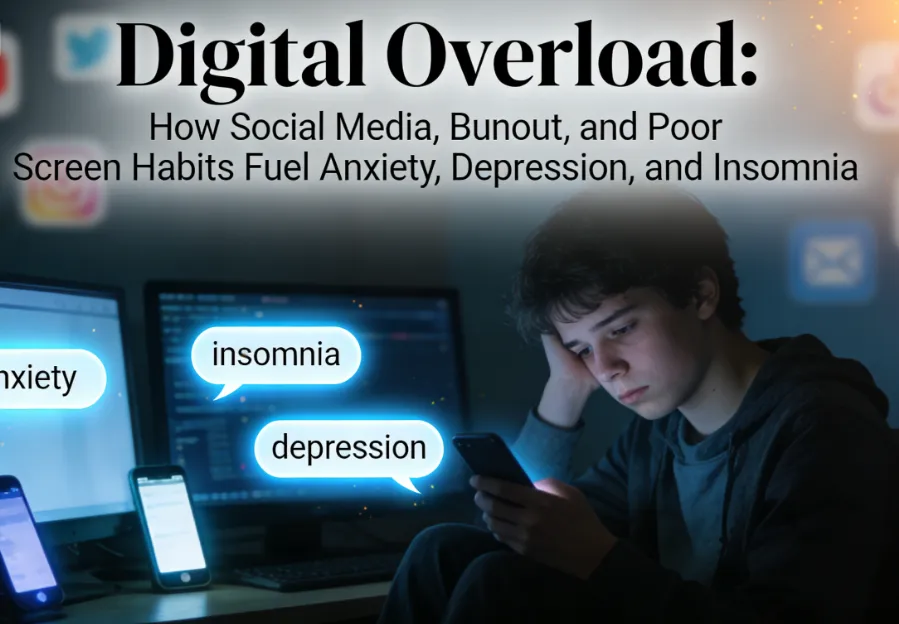
It’s 11:30 PM, and you’re lying in bed, scrolling through your phone. Your thumb flicks past a friend’s vacation photos, a colleague’s promotion announcement, and a influencer’s “perfect” morning routine. You tell yourself you’ll stop in five minutes, but an hour later, you’re still wide awake—mind racing, heart pounding, feeling inadequate and exhausted. Sound familiar? If you’re one of the millions of Americans and Europeans navigating the digital age, this scenario is likely a regular part of your life. What you may not realize is that this seemingly harmless late-night scroll isn’t just robbing you of sleep—it’s creating a cycle that links social media use, digital burnout, anxiety, depression, and insomnia, leaving you feeling trapped in a state of constant stress and discontent.
We live in a world where digital connectivity is non-negotiable. Social media platforms promise connection, entertainment, and opportunity, but beneath the glossy surface lies a hidden cost to our mental and physical health. Studies show that excessive social media use is closely tied to increased rates of anxiety disorder and depression, while digital burnout—fueled by endless screen time and the pressure to be “always on”—exacerbates these mental health struggles. To make matters worse, poor screen habits disrupt our sleep cycles, leading to insomnia, which in turn amplifies anxiety and depression. It’s a vicious cycle, but it’s not irreversible.
In this article, we’ll break down the complex links between social media, digital burnout, screen habits, anxiety, depression, and insomnia—through the lens of real-life experiences that resonate with audiences. We’ll also provide actionable strategies to break the cycle, reclaim your mental health, and build healthier relationships with technology. Along the way, we’ll share resources and solutions that align with your well-being goals—resources you can access directly through our website to support your journey toward balance. Because at the end of the day, your mental health matters, and we’re here to help you prioritize it—while ensuring you have the tools you need to thrive in a digital world.
Part 1: How Social Media Fuels Anxiety and Depression—The Hidden Impact We All Feel
Social media was designed to connect us, but for many, it’s become a source of constant comparison, FOMO (fear of missing out), and overwhelm—all of which feed into anxiety and depression. If you’ve ever felt a twinge of jealousy when scrolling through someone else’s “perfect” life, or felt anxious because you haven’t posted in a while, you’re not alone. These feelings aren’t just trivial—they’re rooted in how social media rewires our brains and shapes our perceptions of ourselves and the world around us.
The Comparison Trap: When “Highlight Reels” Become Our Reality
One of the most insidious ways social media impacts mental health is through the comparison trap. Every time we log on, we’re presented with curated “highlight reels” of other people’s lives—vacations, promotions, happy families, and seemingly effortless success. What we don’t see is the behind-the-scenes: the stress, the failures, the late nights, and the moments of self-doubt. Yet, our brains don’t distinguish between these curated posts and real life, leading us to compare our own messy, imperfect lives to the polished versions we see online.
A 2025 cross-cultural study published in PMC examined the link between social media use and mental health in adolescents from Türkiye, Ireland, and England, finding that spending more than four hours per day on social media (on both weekdays and weekends) was positively associated with anxiety and depression across all groups. The study also noted that individualism— a core value in many cultures—moderated this relationship, meaning that those who prioritize personal achievement and self-image may be more vulnerable to the negative effects of social media comparison.
For example, imagine you’re a 28-year-old professional in New York or London. You log on to Instagram and see a former classmate posting about their promotion to a senior role, a friend sharing photos of their romantic weekend getaway, and a neighbor showcasing their newly renovated home. Meanwhile, you’re stuck in a job you’re not passionate about, single, and living in a small apartment. Without realizing it, you start to question your own worth: Why am I not where they are? What’s wrong with me? These thoughts fester, leading to feelings of anxiety, low self-esteem, and even depression.
This isn’t just a “first-world problem”—it’s a mental health crisis. A 2026 study from Imperial College London found that children who use social media for more than three hours per day are more likely to develop symptoms of depression and anxiety by the time they reach their early teens, with girls being more vulnerable to these effects. The researchers noted that much of this impact is driven by disrupted sleep—another link we’ll explore in detail later—but the comparison trap plays a significant role in amplifying negative emotions.
FOMO and the Pressure to Be “Always On”
FOMO—fear of missing out—is another powerful driver of anxiety related to social media. We’ve all been there: you see a group of friends posting about a night out, a concert, or a gathering, and you feel a pang of anxiety because you’re not there. You start to worry that you’re missing out on experiences, connections, or opportunities, and this worry keeps you glued to your phone, checking for updates, and feeling increasingly disconnected from the present moment.
This pressure to be “always on” also extends to our professional lives. With remote work becoming more common in countries, many of us find ourselves checking work emails, Slack messages, and LinkedIn updates outside of work hours. We fear that if we log off, we’ll miss an important opportunity, fall behind, or disappoint our colleagues. This constant state of hypervigilance keeps our brains in a state of stress, increasing our risk of anxiety disorder and depression.
A 2025 report from the American Psychological Association found that 68% of adults in the U.S. report feeling anxious because of FOMO related to social media, while 56% say that social media makes them feel inadequate. In Europe, a similar study found that 72% of young adults (18-34) feel pressured to present a “perfect” image on social media, and this pressure is linked to higher rates of anxiety and depression. These statistics aren’t just numbers—they’re a reflection of the collective stress we’re all feeling as we navigate a world where we’re constantly connected, yet increasingly disconnected from ourselves.
Social Media and Anxiety Disorder: A Growing Connection
Anxiety disorder is one of the most common mental health conditions in countries, affecting millions of people each year. While there are many factors that contribute to anxiety disorder—including genetics, trauma, and life stress—social media use has emerged as a significant risk factor. Research shows that excessive social media use can trigger or worsen symptoms of anxiety disorder, including excessive worry, restlessness, irritability, and panic attacks.
One reason for this is that social media exposes us to a constant stream of negative news, conflict, and controversy. From political division to global crises, from cyberbullying to viral misinformation, social media bombards us with content that triggers fear and anxiety. A 2024 study published in the Journal of Anxiety Disorders found that people who spend more than three hours per day on social media are 2.3 times more likely to be diagnosed with an anxiety disorder than those who spend less than one hour per day.
Cyberbullying is another major contributor. According to the Pew Research Center, 37% of U.S. teens have experienced cyberbullying, and this experience is closely linked to increased anxiety, depression, and even suicidal thoughts. For adults, cyberbullying can take the form of negative comments, harassment, or doxxing, all of which can trigger intense anxiety and feelings of vulnerability.
If you’ve ever felt your heart race when you see a negative comment on your post, or felt anxious about logging on because you’re afraid of what you’ll see, you’re experiencing the impact of social media on anxiety. These feelings aren’t just temporary—over time, they can develop into a full-blown anxiety disorder, making it difficult to function in daily life.
Part 2: Digital Burnout—The Silent Consequence of Endless Screen Time
If social media is the match that ignites anxiety and depression, digital burnout is the fire that keeps it burning. Digital burnout is a state of physical, mental, and emotional exhaustion caused by excessive screen time and the constant pressure to be connected. It’s a phenomenon that’s become increasingly common in countries, where 87% of office workers spend an average of seven hours per day staring at screens, and more than half report fatigue or depression stemming from digital overload. The World Health Organization (WHO) officially recognized burnout as an “occupational phenomenon” in 2019, highlighting its impact on global health.
What Is Digital Burnout? Signs You’re Already Struggling
Digital burnout isn’t just feeling tired after a long day of using screens—it’s a persistent state of exhaustion that affects every area of your life. It’s characterized by feelings of cynicism, detachment, and reduced productivity, as well as physical symptoms like headaches, eye strain, and sleep disturbances. Unlike regular fatigue, digital burnout doesn’t go away with a good night’s sleep—it requires intentional action to address.
Here are the key signs of digital burnout to watch for—signs that resonate with anyone who’s ever felt overwhelmed by their devices:
- You feel exhausted even after a full night’s sleep: You go to bed at a reasonable hour, but you wake up feeling tired, irritable, and unrefreshed. This is because your brain hasn’t had a chance to fully rest—screen time before bed disrupts your sleep cycle, leaving you in a state of constant fatigue.
- You’re irritable or short-tempered: Small things—like a slow internet connection, a notification, or a request to put down your phone—trigger feelings of anger or frustration. You find yourself snapping at loved ones or colleagues, even over minor issues.
- You have trouble concentrating: You sit down to work or complete a task, but you can’t focus for more than a few minutes. Your mind wanders to your phone, and you find yourself checking social media or emails repeatedly, even when you know you shouldn’t.
- You feel disconnected from the people around you: You’re physically present with friends, family, or colleagues, but you’re mentally checked out—scrolling through your phone, thinking about your next post, or worrying about notifications. You feel lonely even when you’re surrounded by people.
- You have physical symptoms: Headaches, eye strain, neck pain, and dry eyes are all common physical signs of digital burnout. These symptoms are caused by prolonged screen time, which strains your eyes and muscles.
- You lose interest in activities you once enjoyed: Hobbies, exercise, and socializing—things that used to bring you joy—no longer feel appealing. You’d rather spend time on your phone than engage in activities that require effort or connection.
For programmers and other professionals who spend hours each day on screens, digital burnout can manifest in unique ways—like a decline in code quality, frequent small fixes, or a lack of motivation to tackle complex tasks. But regardless of your profession, digital burnout affects everyone the same way: it drains your energy, dampens your mood, and makes it harder to cope with stress—exacerbating anxiety and depression.
The Link Between Digital Burnout, Anxiety, and Depression
Digital burnout and mental health are deeply interconnected. When you’re burned out, your ability to cope with stress is significantly reduced, making you more vulnerable to anxiety and depression. Conversely, anxiety and depression can make it harder to set boundaries with technology, leading to more screen time and further burnout. It’s a cycle that’s hard to break without intentional intervention.
A 2025 study from McLean Hospital found that people with digital burnout are 3.5 times more likely to experience symptoms of depression and 4 times more likely to have an anxiety disorder than those who practice healthy screen habits. The study also noted that digital burnout often leads to a sense of hopelessness—feeling like you can’t escape the constant pressure to be connected, which further fuels negative emotions.
Consider Sarah, a 32-year-old marketing manager in Berlin. She spends 10+ hours per day on her laptop and phone—responding to emails, managing social media accounts, and attending virtual meetings. By the end of the day, she’s exhausted, irritable, and unable to focus. She starts to feel anxious about her performance, worried that she’s not doing enough, and depressed because she has no energy to spend time with friends or pursue her hobbies. This cycle continues for months, until she finally realizes that her digital habits are destroying her mental health.
Sarah’s story is relatable to millions of professionals who feel trapped in a cycle of digital overload. We live in a culture that values productivity and connectivity, and it’s easy to fall into the trap of thinking that we need to be “always on” to succeed. But the truth is, this constant connectivity is taking a toll on our mental health—and it’s time to take back control.
How to Recover from Digital Burnout: Practical Strategies for Audiences
Recovering from digital burnout isn’t about quitting technology altogether—it’s about building healthier relationships with your devices. Here are actionable strategies that are tailored to lifestyles, designed to help you reduce screen time, set boundaries, and reclaim your energy:
- Set “Screen-Free” Times Each Day: Choose specific times—like breakfast, dinner, or the hour before bed—when you put away all devices. This gives your brain a chance to rest and helps you connect with the people around you. For example, make it a rule that no phones are allowed at the dinner table, or that you stop using screens by 9:30 PM each night.
- Use Apps to Track and Limit Screen Time: Most smartphones have built-in features that track your screen time and allow you to set limits for specific apps (like social media). Apps like Screen Time (iOS) and Digital Wellbeing (Android) can help you see how much time you’re spending on your phone and set boundaries. For example, you can set a limit of 30 minutes per day on Instagram or TikTok, and your phone will notify you when you’ve reached that limit.
- Practice the “20-20-20” Rule for Eye Health and Mental Breaks: Every 20 minutes, take a 20-second break and look at something 20 feet away. This reduces eye strain and gives your brain a quick break from screen time. It’s a simple habit that can make a big difference, especially if you spend hours at a computer.
- Set Boundaries with Work: If you work from home, create a clear separation between work and personal time. Set specific work hours, and once those hours are over, log off your computer and put away your work phone. Avoid checking work emails or messages outside of work hours—your mental health is more important than being available 24/7.
- Engage in “Offline” Activities: Make time for hobbies and activities that don’t involve screens—like reading, hiking, cooking, or spending time with friends. These activities help you recharge, reduce stress, and reconnect with yourself. For example, try a weekly hike in a local park, or join a book club to meet new people and discuss your favorite books.
- Practice Mindfulness and Meditation: Mindfulness and meditation can help you reduce stress, improve focus, and cope with digital burnout. Apps like Headspace and Calm offer guided meditations that are specifically designed to help you unwind after a long day of screen time. Even 10 minutes of meditation per day can make a difference in your mental health.
For those struggling with severe digital burnout, our website offers personalized coaching sessions with mental health professionals who specialize in digital wellness. These sessions are tailored to your specific needs, helping you develop a plan to reduce screen time, set boundaries, and recover from burnout. You can book a free 15-minute consultation today to learn more—link in the bio below.
Part 3: Healthy Screen Habits for Better Sleep—Breaking the Insomnia Cycle
If social media fuels anxiety and digital burnout drains your energy, poor screen habits are the final piece of the puzzle—disrupting your sleep and amplifying all of these struggles. Insomnia is a common problem in countries, with 30-40% of adults reporting occasional insomnia and 10-15% reporting chronic insomnia. What many people don’t realize is that their screen habits are a major cause of their sleep problems—and addressing these habits can help them get better sleep, reduce anxiety, and improve their mental health.
How Screen Time Disrupts Sleep: The Science Behind Blue Light
The blue light emitted by smartphones, tablets, laptops, and TVs is one of the biggest culprits when it comes to poor sleep. Blue light suppresses the production of melatonin—the hormone that regulates your sleep-wake cycle. When you use screens before bed, your brain thinks it’s still daytime, so it stops producing melatonin, making it harder to fall asleep, stay asleep, and get restful sleep.
A 2026 study from Harvard Medical School’s Sleep Medicine Center confirmed this, finding that 1 hour of blue light blocking reduced insomnia symptoms by 79% and shortened the time it takes to fall asleep by 48%. The study also found that morning blue light exposure (from natural sunlight or a blue light lamp) can help your circadian rhythm, improving both sleep quality and daytime alertness.
But blue light isn’t the only problem. The content we consume on screens before bed—like social media posts, work emails, or exciting videos—also stimulates our brains, keeping us in a state of alertness and making it harder to wind down. For example, scrolling through a stressful news feed or responding to a work email before bed can trigger anxiety, which further disrupts sleep.
Imperial College London’s 2026 study further linked social media use to sleep disruption, noting that excessive social media use (especially in the evenings) reduces sleep duration and quality, which in turn leads to increased anxiety and depression in children and adolescents. This link is just as strong in adults—with a 2025 study from the Sleep Foundation finding that people who use social media for more than 2 hours before bed are 2.5 times more likely to experience insomnia than those who put away their devices 1 hour before bed.
The Link Between Insomnia, Anxiety, and Depression
Insomnia and mental health are closely intertwined—each one fuels the other. Anxiety and depression can cause insomnia, and insomnia can worsen anxiety and depression. It’s a cycle that’s hard to break without addressing both issues.
People with anxiety disorder often struggle with insomnia because their minds are racing with worry and fear, making it hard to fall asleep and stay asleep. A state of hyperarousal—common in anxiety—keeps the brain alert, even at night, leading to difficulty falling asleep, frequent awakenings, and poor sleep quality. Conversely, insomnia can increase anxiety because you start to worry about not getting enough sleep, and this worry keeps you awake even longer.
Depression is also closely linked to insomnia. Many people with depression experience early morning awakenings or difficulty falling asleep, and poor sleep can worsen depressive symptoms like low mood, fatigue, and lack of motivation. A 2025 study from the Sleep Foundation found that people with chronic insomnia are 2 times more likely to develop depression than those who get adequate sleep.
Dr. Abhinav Singh, a sleep physician, sums it up perfectly: “Anxiety and insomnia are best friends, and when you experience one, you are most likely to experience the other”. This cycle is particularly damaging because poor sleep reduces your ability to cope with stress, making you more vulnerable to anxiety and depression, which in turn makes it harder to sleep.
Healthy Screen Habits to Improve Sleep: Evidence-Based Strategies
Improving your sleep starts with changing your screen habits. Here are evidence-based strategies, backed by Harvard Medical School and other leading institutions, to help you get better sleep and break the cycle of insomnia, anxiety, and depression:
- Stop Using Screens 1 Hour Before Bed: This is the most important habit you can adopt. Put away your smartphone, tablet, laptop, and TV at least 1 hour before bed to allow your brain to produce melatonin and wind down. If you need to use a device before bed, use blue light blocking glasses or enable night mode (which reduces blue light). Our website offers a curated selection of high-quality blue light blocking glasses—perfect for late-night work or screen time—with exclusive discounts for our readers.
- Create a “Sleep-Friendly” Bedroom: Make your bedroom a screen-free zone. Remove TVs, laptops, and tablets from your bedroom, and keep your smartphone outside the room (or use it as an alarm clock only). This reduces the temptation to scroll before bed and helps you associate your bedroom with sleep, not screen time. We also recommend using blackout curtains, a white noise machine, and a comfortable mattress to create the ideal sleep environment—check out our website for our top sleep product recommendations.
- Use Morning Blue Light to Calibrate Your Circadian Rhythm: Spend 10-15 minutes outside in the morning (within 30 minutes of waking up) to expose yourself to natural sunlight. This blue light helps your circadian rhythm, making it easier to fall asleep at night and wake up feeling refreshed. If you can’t go outside, use a blue light lamp (6500K, 1000lux+) for 30 minutes each morning. Our website offers a range of blue light lamps that are clinically proven to improve sleep quality—shop now for 20% off your first order.
- Avoid Stimulating Content Before Bed: Stay away from social media, news, work emails, and exciting videos before bed. Instead, engage in relaxing activities like reading a book (physical book, not an e-reader), taking a warm bath, or practicing gentle yoga. These activities help you wind down and prepare your body for sleep.
- Stick to a Consistent Sleep Schedule: Go to bed and wake up at the same time every day—even on weekends. This helps regulate your circadian rhythm and improves sleep quality. Avoid napping for more than 20 minutes during the day, as this can disrupt your nighttime sleep.
For those struggling with chronic insomnia, our website offers a free sleep guide that includes a 7-day plan to improve your sleep habits, as well as access to our online sleep community where you can connect with others who are going through the same struggles. We also partner with sleep specialists who offer virtual consultations—book your appointment today to get personalized advice for your sleep needs.
Part 4: Reclaiming Your Well-Being—How Our Website Can Help You Thrive
Breaking the cycle of social media overload, digital burnout, anxiety, depression, and insomnia isn’t easy—but you don’t have to do it alone. Our website is dedicated to helping audiences prioritize their mental and physical health in a digital world, and we offer a range of resources, products, and services to support you on your journey.
Resources to Support Your Mental Health
- Personalized Coaching Sessions: Our team of mental health professionals specializes in digital wellness, anxiety, depression, and sleep. We offer one-on-one coaching sessions (virtual or in-person, depending on your location) to help you develop a personalized plan to reduce screen time, set boundaries, and improve your mental health. Book a free 15-minute consultation today to learn more.
- Online Courses: We offer self-paced online courses on topics like “Breaking the Social Media Comparison Trap,” “Recovering from Digital Burnout,” and “Healthy Screen Habits for Better Sleep.” These courses are designed by experts and include video lessons, worksheets, and community support to help you implement the strategies you’ve learned. Enroll today and get 15% off your first course with code DIGITALWELLNESS.
- Sleep Guide and Community: Our free sleep guide includes a 7-day plan to improve your sleep habits, as well as tips for managing insomnia, anxiety, and depression. Join our online sleep community to connect with others, share your experiences, and get support from our team of experts.
Products to Help You Build Healthy Habits
- Blue Light Blocking Glasses: Our curated selection of blue light blocking glasses is designed to reduce eye strain and improve sleep quality. We offer a range of styles for men and women, and all glasses come with a 30-day money-back guarantee. Shop now and get 20% off your first order.
- Blue Light Lamps: Our blue light lamps are clinically proven to your circadian rhythm, improve sleep quality, and reduce daytime fatigue. Perfect for those who work from home or don’t get enough natural sunlight. Use code SLEEPBETTER for 10% off.
- Mindfulness and Meditation Tools: We offer a range of mindfulness and meditation products, including guided meditation audio files, mindfulness journals, and essential oils to help you reduce stress and unwind. All products are cruelty-free and made with natural ingredients.
Community Support
You’re not alone in this journey. Our online community is a safe space where you can connect with others who are struggling with social media overload, digital burnout, anxiety, depression, and insomnia. Share your story, ask for advice, and celebrate your progress—we’re here to support you every step of the way.
Conclusion: You Have the Power to Break the Cycle
Social media, digital burnout, and poor screen habits have created a cycle that’s damaging the mental and physical health of millions of users. But the good news is that you have the power to break this cycle. By understanding the links between social media, anxiety, depression, digital burnout, and insomnia, and by implementing the strategies outlined in this article, you can reclaim your well-being, improve your sleep, and build a healthier relationship with technology.
Remember: it’s not about quitting technology altogether—it’s about using it intentionally. It’s about setting boundaries, prioritizing your mental health, and making choices that align with your well-being. Whether you’re struggling with occasional anxiety, chronic insomnia, or digital burnout, our website is here to help you every step of the way.
Take the first step today: put away your phone for 30 minutes, go for a walk, and breathe. You deserve to feel calm, rested, and fulfilled—and we’re here to help you make that a reality. Visit our website now to access our free resources, shop our products, and book a coaching session. Your mental health is worth it.