Ernest Hemingway (July 21, 1899- July 2, 1961) was an American writer and journalist whose unique and understated writing style had a profound impact on 20th century novels and culture.
Hemingway experienced the major conflicts in Europe during the first half of the 20th century. His war experience brought powerful accounts, describing the terror of modern warfare. Two important works include “Farewell to Arms” (1929) – about World War I, and “For Whom the Bell Tolls” (1940) – about the Spanish Civil War. Many of his works are considered classics of American literature.
Early life
Hemingway was born in Oak Park, Illinois in 1899. After leaving school, he worked as a journalist for the Kansas City Star. Later, his writing was influenced by the style guidelines of the newspaper. Use short sentences. Use short first paragraphs. Use strong English. Stay positive, not negative.
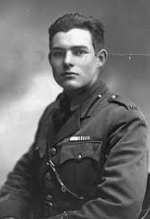
However, after several months of work, he signed up to join the Red Cross in 1918 and volunteered as an ambulance driver during World War I. He was sent to the front line in Italy and witnessed the terror of trench warfare. In July 1918, he was seriously injured by mortar fire, but despite being injured and subjected to machine gun fire, he managed to safely evacuate two Italian comrades. He was awarded the Silver Medal of Italy for this heroic act.
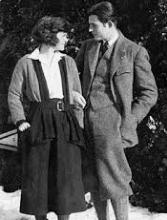
During his rehabilitation, he fell in love with Red Cross nurse Agnes von Kurowski, but she rejected his proposal. This rejection left him with profound emotional trauma. Ten years later, in 1929, Hemingway wrote a semi autobiographical novel called ‘A Farwell to Arms’ based on his own war experience. The protagonist in the book is an ambulance driver who is disappointed with the war and subsequently elopes with a Spanish girl to Switzerland.
Hemingway returned to the United States, but became estranged from his mother. Hemingway did not like his mother’s seemingly devout moral preaching tone. His mother accused him of being “lazy, idle, and pursuing pleasure”. Hemingway’s spirit of freedom rebelled against his mother’s more religious and moral attitude, and he left the family, unable to reconcile thereafter.
In 1921, he married Hadley Richardson, becoming the first of four wives. He then moved to Chicago and settled in Paris, where he spent most of the interwar period. He worked as a journalist for the Toronto Star and met many modernist writers, such as James Joyce, Gertrude Stein, and Ezra Pound, who lived in Paris at the time. In 1926, he published a successful novel called ‘The Sun Also Rises’, which tells the story of a generation of American socialites and their characters from various parts of Europe. Hemingway himself enjoyed the atmosphere and intellectual curiosity of the “Roaring Twenties” in Paris.
“If you are lucky enough to have lived in Paris as a young man, then wherever you go for the rest of your life, it stays with you, for Paris is a moveable feast.”
– Ernest Hemingway, A Moveable Feast
In 1932, he wrote a non fiction work called ‘Dance of Death’, which sympathetically examined the bullfighting customs in Spain. Hemingway pondered whether torturing and killing animals as entertainment was reasonable. Hemingway was deeply fascinated by this heroic yet barbaric act, which attracted Latin masculinity, and Hemingway believed that it was not sports, but art, the only art that artists faced the danger of death.
For whom does the bell ring
In 1937, he went to Spain to report on the Spanish Civil War. He advocates for international support for the People’s Front, which is currently fighting against the fascist regime led by Franco. He later wrote a book called “For Whom the Bell Tolls” (1940), documenting the struggle and brutality of the Spanish Civil War. During World War II, he continued to work as a foreign journalist. He participated in the Normandy landings and the liberation of Paris.
Literary recognition
After World War II, Hemingway purchased a house in Fencavegia, Cuba (“Lookout Farm”). In Cuba, he created “The Old Man and the Sea” (1952) – a story about an elderly fisherman and devout Catholic named Spencer Tracy. This novel received praise from critics and he also won the Pulitzer Prize. (1953)
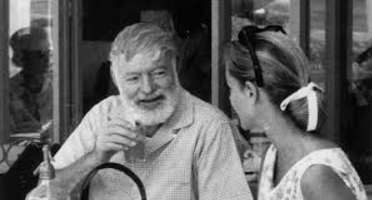
In 1954, Hemingway suffered two plane crashes, resulting in serious injuries and lifelong suffering. After the accident, Hemingway was bedridden for many years. At the end of the year, he was awarded the Nobel Prize in Literature (1954). His Nobel Prize commendation speech is
“his mastery of the art of narrative, most recently demonstrated in The Old Man and the Sea, and for the influence that he has exerted on contemporary style.”
For many years, Hemingway had been seeking the Nobel Prize, but when he learned of it, he humbly hinted that other writers might be more deserving. He was worried that the news of his imminent death might affect the sympathy of the jury.
In 1960, Fidel Castro came to power in Cuba, forcing him to return to the United States – he returned to Ketchum, Idaho. Hemingway’s last few years were very difficult, he suffered from great physical pain, decreased mental clarity, writing difficulties, and worsening depression. He tried electroconvulsive therapy, but to no avail. In 1961, at the age of 62, he committed suicide with a hunting rifle.
Hemingway’s writing style
Hemingway’s style had some similarities to other modernist writers. It was a reaction against the more elaborate, turgid style of the nineteenth century. Hemingway’s writing was direct and minimalist – often leaving things unstated, but at the same time profoundly moving for bringing the reader into the heart of the story and experience.
“All good books are alike in that they are truer than if they had really happened and after you are finished reading one you will feel that all that happened to you and afterwards it all belongs to you: the good and the bad, the ecstasy, the remorse and sorrow, the people and the places and how the weather was. If you can get so that you can give that to people, then you are a writer.”
– Ernest Hemingway
Hemingway termed his style the Iceberg theory.
“If a writer of prose knows enough of what he is writing about he may omit things that he knows and the reader, if the writer is writing truly enough, will have a feeling of those things as strongly as though the writer had stated them. The dignity of movement of an ice-berg is due to only one-eighth of it being above water. A writer who omits things because he does not know them only makes hollow places in his writing.”
—Ernest Hemingway in Death in the Afternoon
Hemingway said the facts float above the water, but the structure is kept out of sight. Behind the minimalist prose is a great effort, but the result is simplicity, immediacy and clarity.
He was married four times.
“There are events which are so great that if a writer has participated in them his obligation is to write truly rather than assume the presumption of altering them with invention.”
– Ernest Hemingway – Preface to The Great Crusade (1940) by Gustav Regler
Religious views of Hemingway
Hemingway was born and raised in a strict Protestant tradition. After he married his second wife, he converted to Catholicism. Although he was not always observant in attending mass, he was fascinated by Catholic rites, and would frequently visit churches on his own and light a candle. In his writings, he was also interested in the idea of pilgrimage, to Catholic sites.
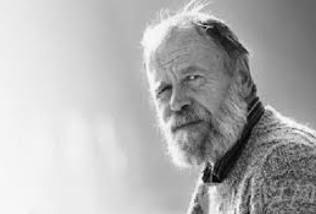
After his serious injury in July 1918, he was baptized by an Italian priest and given the last rites. Hemingway also describes a spiritual experience during his serious injury. He says he felt that his
“soul or something coming right out of my body, like you’d pull a silk handkerchief out of a pocket by one corner. It flew around and then came back and went in again and I wasn’t dead anymore.”
Selected list of works by Hemingway
- Indian Camp (1926)
- The Sun Also Rises (1926)
- A Farewell to Arms (1929)
- The Short Happy Life of Francis Macomber (1935)
- For Whom the Bell Tolls (1940)
- The Old Man and the Sea (1951)
- A Moveable Feast (1964, posthumous)
- True at First Light (1999)