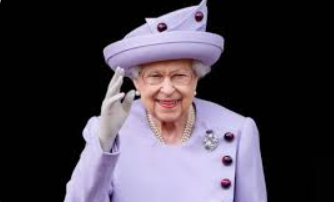
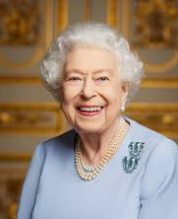
Queen Elizabeth II (1926–2022) ascended the throne in 1952 as the sovereign of the United Kingdom and
the head of the Commonwealth, while also serving as the Supreme Governor of the Church of England. She became the longest-reigning monarch in British history, serving for over 70 years and guiding the monarchy, the UK, and the Commonwealth through significant change.
Image suggestion: Official portrait of Queen Elizabeth II or her coronation photo.
Early Life
Elizabeth was the first daughter of Prince Albert, Duke of York (later King George VI), and Elizabeth Bowes-Lyon (later Queen Mother). Her father became king unexpectedly after his brother, Edward VIII, abdicated in 1936.
Elizabeth and her sister, Princess Margaret, were educated at home. During World War II, they were evacuated to Balmoral and later moved to Windsor Castle. In 1945, Elizabeth joined the Auxiliary Territorial Service, serving as a driver and mechanic, showing early signs of responsibility and dedication.
Image suggestion: Photo of Elizabeth in military uniform or Balmoral/Windsor Castle.
Youth and Marriage
In 1947, Elizabeth married Prince Philip of Greece and Denmark at Westminster Abbey. Their marriage lasted over 70 years and was a source of mutual strength.
- Their first child, Prince Charles, was born in 1948.
- They had four children in total: Charles, Anne, Andrew, and Edward.
Image suggestion: Wedding photo or family portrait.
Coronation and the Golden Era (1952–1960s)
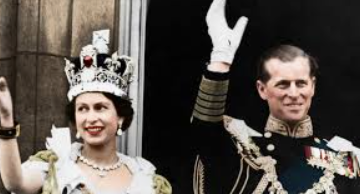
In 1952, following the death of King George VI, Elizabeth was crowned queen amid widespread public celebration. Her coronation was broadcast globally, marking a new era after World War II.
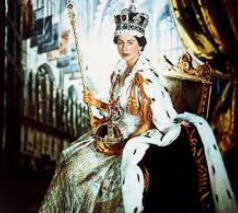
The 1950s are often considered the “golden era” of her reign. The public’s respect and admiration for the royal family remained high, and the young Elizabeth appeared as a real-life fairy-tale princess.
Image suggestion: Coronation ceremony photos or public royal events.
Social Change and Challenges (1970s–1990s)
As society changed and the media evolved, the monarchy faced increasing scrutiny.
- 1977: Silver Jubilee celebrations
- 1981: Prince Charles and Princess Diana’s wedding
The 1990s were especially challenging due to intense media focus on Princess Diana and the breakdown of her marriage. In 1992, the Queen famously described it as her “Annus Horribilis,” marked by the Charles-Diana split, Windsor Castle fire, and other controversies.
Quote:
“1992 is not a year on which I shall look back with undiluted pleasure. In the words of one of my more sympathetic correspondents, it has been a ‘horrible year.’” — 1992 Christmas Speech
Princess Diana’s death in 1996 initially drew public criticism toward the Queen, but her later tribute helped ease tensions.
Image suggestion: 1992 royal events, Diana’s wedding, or news photos.
The Commonwealth and Global Influence
Queen Elizabeth II placed great importance on uniting the Commonwealth, particularly during the post-colonial era, serving as a key figure for cohesion and diplomacy.
- In 2010, she emphasized international cooperation in a speech at the United Nations.
Quote:
“In tomorrow’s world, we must work together as never before, if we are truly to become a United Nations.”
Image suggestion: Queen attending a Commonwealth summit or speaking at the UN.
21st Century Revival and Celebrations
In the 2000s, the monarchy regained popularity after overcoming earlier difficulties.
- 2012: Prince William and Kate Middleton’s wedding
- 2012: Queen’s Diamond Jubilee
- 2012: Attendance at the London Olympics opening ceremony
Image suggestion: William and Kate’s wedding, Diamond Jubilee events, or Olympic ceremony photos.
Political Neutrality and Religious Faith
Throughout her reign, Queen Elizabeth II remained politically neutral, providing stability and unity.
- She was a devout Christian and also promoted religious freedom for all faiths.
Quote:
“The concept of our National Church is sometimes misunderstood, and I think often underestimated. Its duty is not to defend the Church of England to the exclusion of others, but rather to protect the free practice of all faiths.” — 2012 Lambeth Palace Speech
Image suggestion: Queen at church or religious ceremonies.
Later Years and Passing
Even in her 90s, Queen Elizabeth II remained in good health and continued her duties. She passed away on September 8, 2022, triggering worldwide mourning.
- Her funeral on September 19, 2022, at Westminster Abbey was attended by numerous world leaders, and she was buried beside Prince Philip.
Image suggestion: Funeral photos or global tributes.
Legacy
Queen Elizabeth II’s 70-year reign demonstrated unwavering dedication to her country and the Commonwealth. Through post-war recovery and modern societal changes, she remained a symbol of service, stability, and resilience, earning her place as one of the most respected monarchs in the world.
Image suggestion: Collage of Elizabeth II at different stages of her life.